
HubSpot Sequence vs Workflow: Building Smarter Lead Nurturing
Have you ever wondered why some email automation campaigns feel timely and helpful while others fall flat, go ignored, or even trigger an unsubscribe?
The difference often comes down to one important decision in the automation setup: HubSpot Sequence vs Workflow.
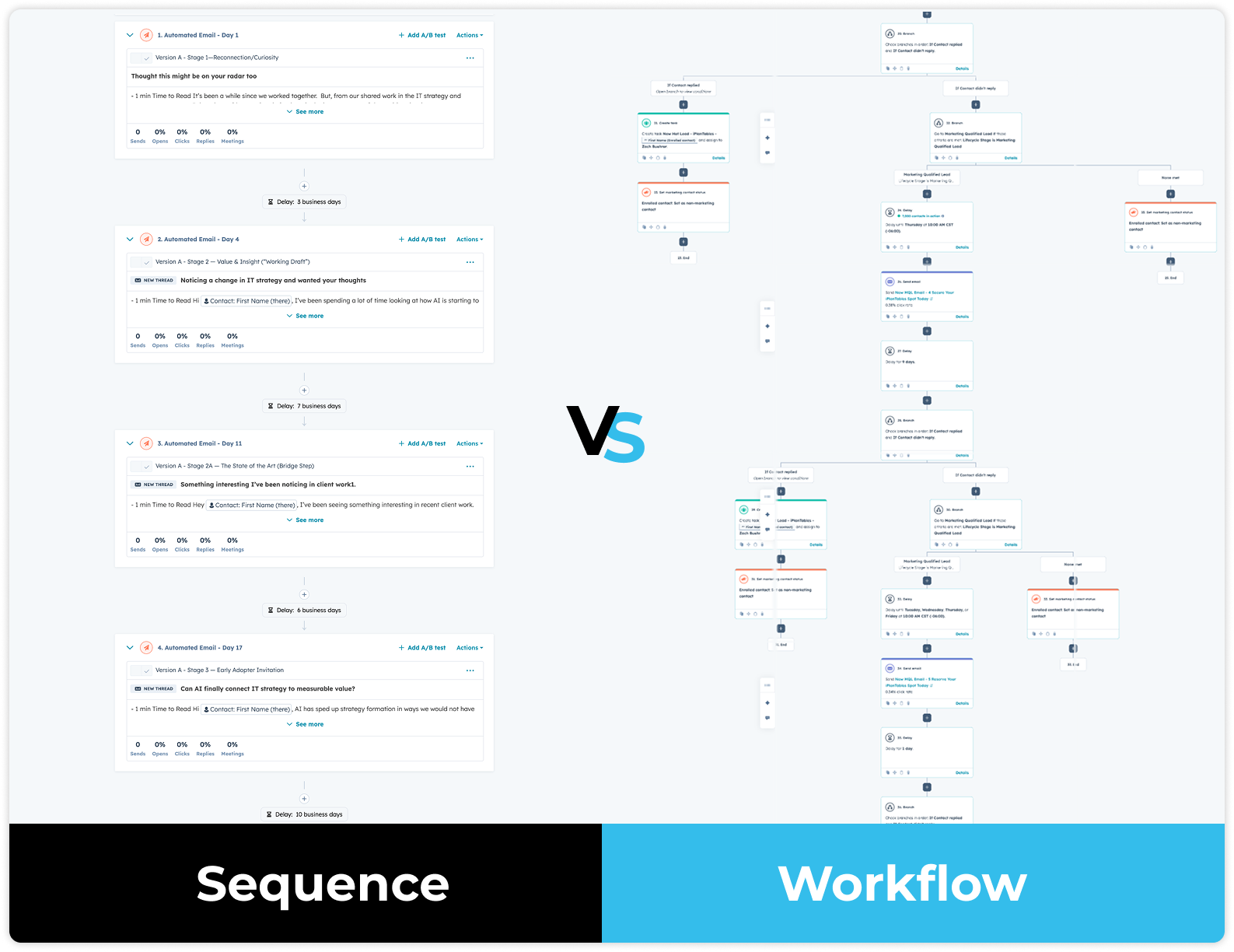
Sequences follow a predefined order—a fixed set of emails sent at scheduled intervals—regardless of how prospects interact. Workflows, in contrast, listen to behavior, respond to engagement signals, and trigger actions only when specific conditions are met. This shift from time-based automation to behavior-based automation fundamentally changes how leads are nurtured, qualified, and handed off to sales.
Let us explain how HubSpot Sequences and Workflows differ in philosophy and execution, when each approach is most effective, and what changes when teams transition from linear email logic to behavior-driven automation for scalable lead nurturing.
HubSpot Sequence vs Workflow – The Starting Point
Many teams begin their automation journey with email sequences because they are easy to set up and effective for short-term outreach. At low lead volume, this approach may seem efficient and manageable.
However, as inbound demand grows and buyer journeys become less predictable, limitations begin to surface. Automation that relies solely on time intervals struggles to remain relevant as the buyer journey changes midstream.
Understanding these limitations is important before evaluating why workflows are often introduced later.
About the Client
AAA Food Handler is a U.S.-based food safety education provider serving restaurants, hospitality businesses, and food service professionals nationwide. The organization offers certification programs that are practical, compliant, and accessible for both individuals and employers.
Industry: Food & Beverage Services
Company Size: 2–10 employees
Location: Frisco, TX
Tools Used

About the Client
AAA Food Handler is a U.S.-based food safety education provider serving restaurants, hospitality businesses, and food service professionals nationwide. The organization offers certification programs that are practical, compliant, and accessible for both individuals and employers.
Industry: Food & Beverage Services
Company Size: 2–10 employees
Location: Frisco, TX
Tools Used
Industry: Food & Beverage Services
Company Size: 2–10 employees
Location: Frisco, TX
Tools Used
Before partnering with Arissa International, the team relied primarily on HubSpot email sequences to nurture inbound leads—an approach that worked initially but struggled to scale as demand increased.
The Challenge With HubSpot Sequences Before Switching to Workflows
Inbound leads were being captured successfully through website forms. However, the experience after submission revealed clear limitations.
A sequence-driven approach meant:
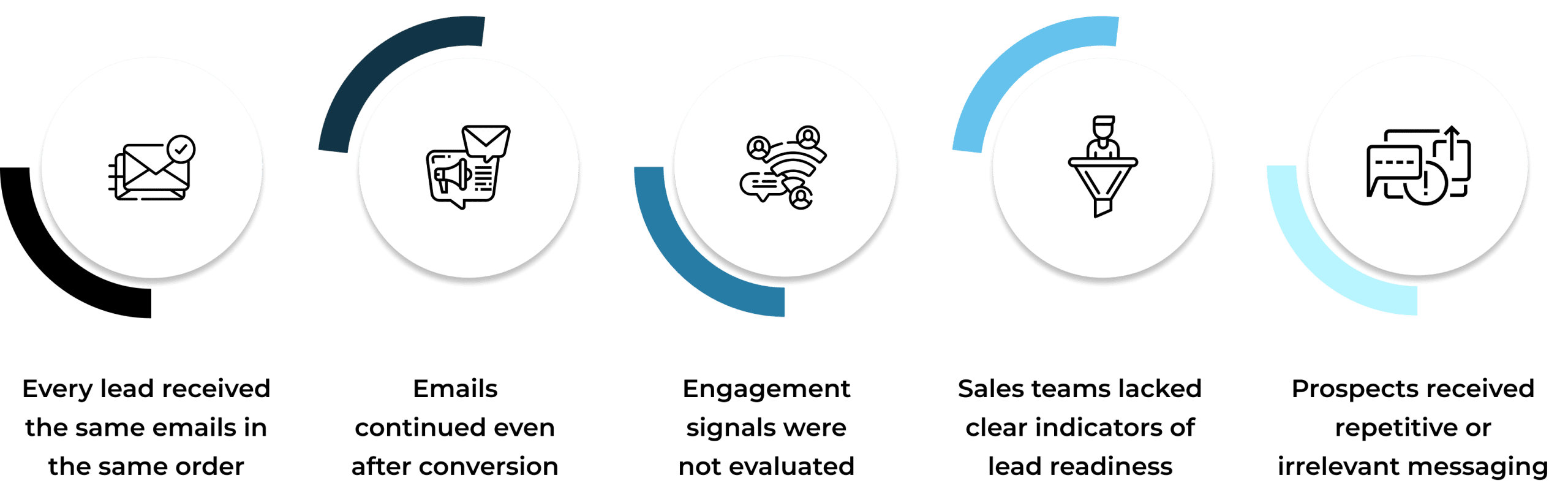
As lead volume grew, time-based automation created friction rather than efficiency.
Why Time-Based HubSpot Sequences Fail to Match User Behavior
HubSpot Sequences operate on predefined schedules. While effective for short, one-to-one outreach, they lack the conditional logic required to respond to real-time engagement.
As a result, automation continues even when buyer intent changes, creating misalignment between marketing activity and actual user behavior.
HubSpot Sequence vs Workflow – Understanding the Core Difference
To solve these challenges, the distinction between HubSpot Sequences and Workflows became critical.

This difference forms the foundation of scalable, intelligent lead nurturing.
HubSpot Email Sequences – Linear Automation for Short -Term Outreach
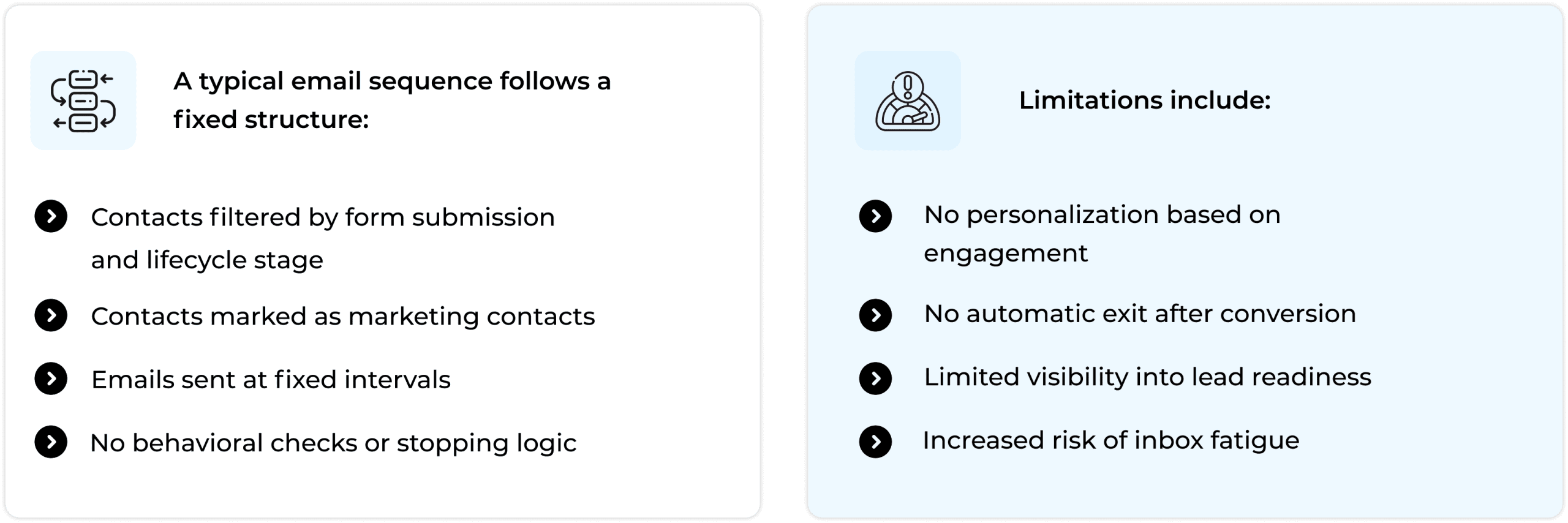
Sequences are easy to deploy—but not designed for intelligent, scalable nurturing.
Why HubSpot Sequences Fall Short as Lead Volume Scales
As inbound inquiries increase, adaptability becomes essential. Without behavioral logic, emails continue regardless of engagement, and sales teams receive leads without clarity on readiness.
At scale, linear automation creates confusion instead of insight.
HubSpot Workflows – Behavior-Driven Automation Built for Scale
HubSpot Workflows introduce automation that responds dynamically to user actions.
Key capabilities include:
- Triggers based on form submissions
- Lifecycle stage and engagement score monitoring
- Conditional branches based on behavior
- Automatic identification of Sales Qualified Leads (SQLs)
- Marketing emails stop once a lead qualifies
- Instant sales ownership assignment
Automation shifts from being time-based to intent-based.
How the HubSpot Workflow Replaced Linear Email Logic
The workflow followed a logic-driven path:
- Email sent after form submission
- Strategic delay applied
- The system evaluated the lifecycle stage and engagement score
If SQL:
- Contact marked as non-marketing
- Marketing emails stopped
- The sales team was notified immediately
If not SQL:
- Nurturing continued with the next email
Each message was triggered by behavior—not by a time interval.
Results of Switching From HubSpot Sequences to Workflows
The transition delivered measurable improvements across engagement, efficiency, and scalability.
Key outcomes included:
- Clear visibility into lead readiness
- Reduced unnecessary email volume
- Messaging aligned with real engagement signals
- Stronger marketing-to-sales handoff
- Scalable automation without loss of relevance
Key Takeaway From the HubSpot Sequence vs Workflow Comparison
Sequences send. Workflows respond.
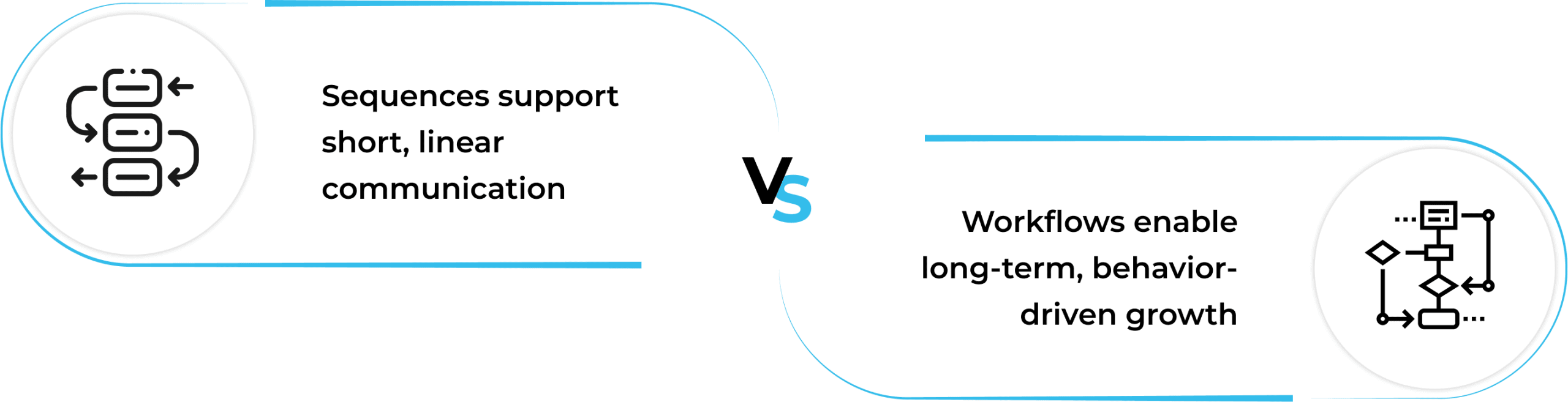
Understanding HubSpot Sequence vs Workflow is essential for building marketing automation that scales with relevance.
Conclusion – Choosing Between HubSpot Sequence vs Workflow for Growth
This case study demonstrates that automation is most effective when it respects user intent. By prioritizing relevance over volume, organizations can build scalable lead-nurturing systems designed for clarity, efficiency, and measurable outcomes.
Understanding HubSpot Sequence vs Workflow is critical for sustainable, digital-first growth.
Frequently Asked Questions (FAQs)
HubSpot Sequences are time-based and linear, while HubSpot Workflows are behavior-driven and adapt based on engagement and lifecycle stages.
HubSpot Sequences work best for short-term, one-to-one sales follow-ups where personalization does not depend on user behavior.
HubSpot Workflows are ideal for scalable lead nurturing, qualification, and automation that responds to real-time user actions.
Yes. HubSpot Workflows can automatically stop emails once a contact reaches a qualified stage, preventing unnecessary outreach.
Automation becomes behavior-driven, resulting in more relevant messaging, fewer unnecessary emails, and stronger alignment between marketing and sales.
Arissa International helps businesses design HubSpot automation that prioritizes relevance, intent, and scalability. Rather than applying generic templates, the team focuses on aligning workflows with real buyer behavior, lifecycle stages, and sales readiness—ensuring automation supports both marketing efficiency and meaningful sales outcomes.
Need help?
Your marketing success begins here. Contact us now.