
Improving GTMetrix Speed Test Scores for a High-Traffic Website
A GTMetrix Speed Test does more than report load time; it exposes how efficiently a website performs under real-world conditions. For high-traffic websites, weak GTMetrix scores often indicate deeper issues such as rendering delays, server latency, and inefficient asset delivery.
This case study focuses on how improving the performance score in GTMetrix helped a SaaS platform regain performance stability, usability, and search visibility.
About the Client
My Review Concierge, a reputation management software by The Reputation Lab, helps businesses monitor and respond to online reviews. With roots in hospitality and over 1.3 million reviews processed, it’s trusted by hotels, resorts, and brands across North America to protect and strengthen their online reputation.
Industry: Business Consulting and Services
Company Size: 11-50 employees
Location: United States
Tools Used

About the Client
My Review Concierge, a reputation management software by The Reputation Lab, helps businesses monitor and respond to online reviews. With roots in hospitality and over 1.3 million reviews processed, it’s trusted by hotels, resorts, and brands across North America to protect and strengthen their online reputation.
Industry: Business Consulting and Services
Company Size: 11-50 employees
Location: United States
Tools Used

Industry: Business Consulting and Services
Company Size: 11-50 employees
Location: United States
Tools Used
What Is GTMetrix Speed Test and What Does It Measure?
GTMetrix Speed Test is a webpage performance assessment solution that evaluates how quickly and efficiently a webpage loads. It combines metrics from Lighthouse and Core Web Vitals to assess the actual webpage visitor experience.
A performance report generally evaluates:
- Page load time and rendering behavior
- Core Web Vitals such as LCP and TTFB
- Page size and request volume
- JavaScript and CSS execution efficiency
These metrics collectively indicate how well a website performs for both users and search engines.
Why Performance Score in GTMetrix Matters for Business-Critical Websites
For SaaS platforms and high-traffic websites, performance metrics directly influence:
- User engagement and session duration
- Search engine crawl efficiency and rankings
- Conversion rates for demos, sign-ups, and logins
Poor GTMetrix results often correlate with higher bounce rates, delayed interaction readiness, and inconsistent performance across devices.
Why Improving Page Speed Scores Is a Game Changer
Improving performance scores is not about achieving a higher grade; it’s about removing friction from the user journey. Every delay in rendering, interaction, or content delivery compounds into lost trust and reduced performance outcomes.
For this SaaS website, improving GTMetrix scores was essential to:
- Support consistent demo delivery
- Improve platform accessibility during peak traffic
- Strengthen SEO signals tied to performance metrics
Performance Challenges Identified on a High-Traffic SaaS Website
The website belonged to an online reputation management software provider, operating as a SaaS platform with a steady volume of returning users, live dashboards, and client-facing access points. Because users frequently interacted with dynamic content, performance consistency was critical.
Initial Speed Test reports revealed a Grade D score with a fully loaded time of 6.2 seconds, which had begun to affect usability and search visibility. The underlying issues included:
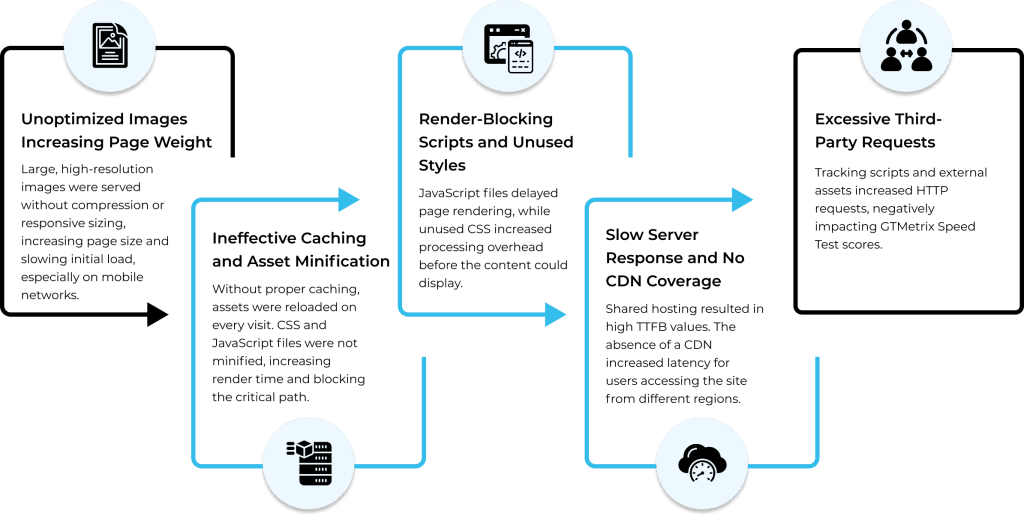
Optimization Approach Used to Improve Website Performance
Each optimization step directly addressed a specific performance bottleneck to ensure sustained improvement.
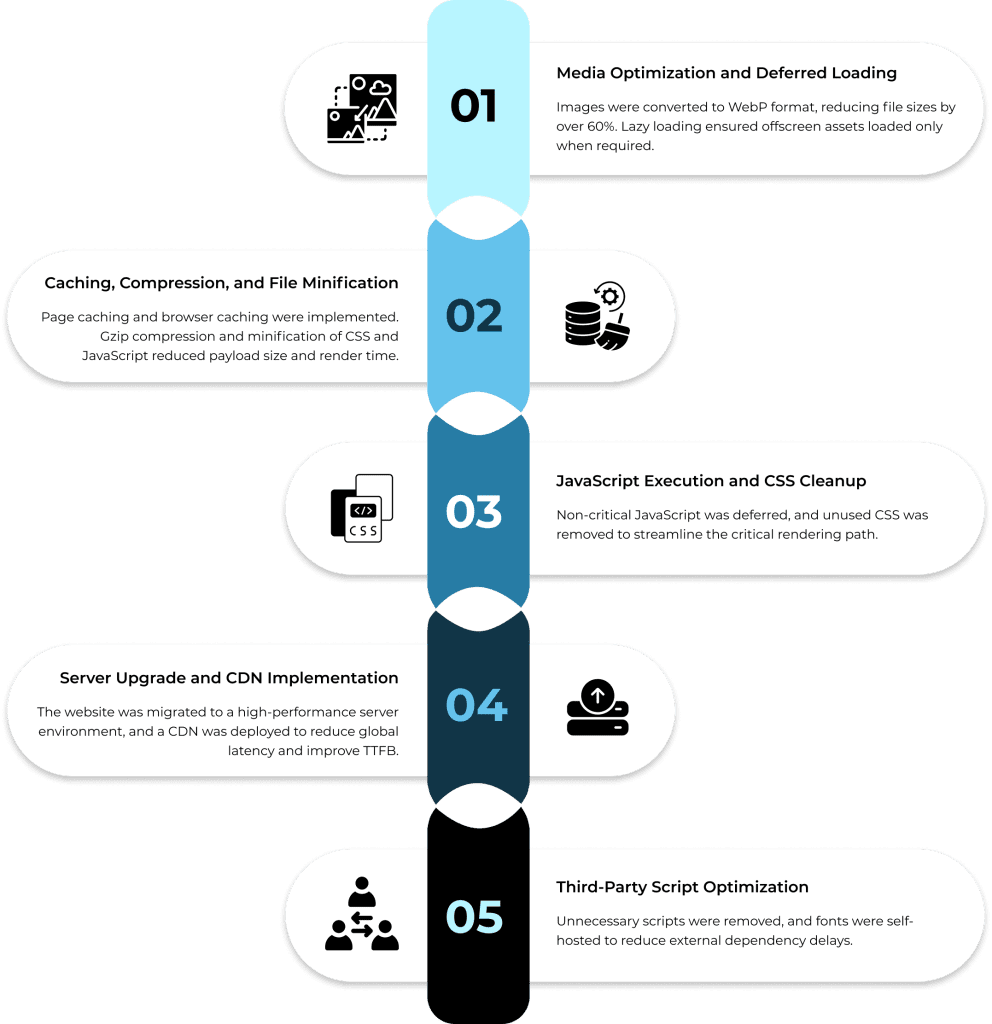
Performance Impact Measured Through Optimization Results
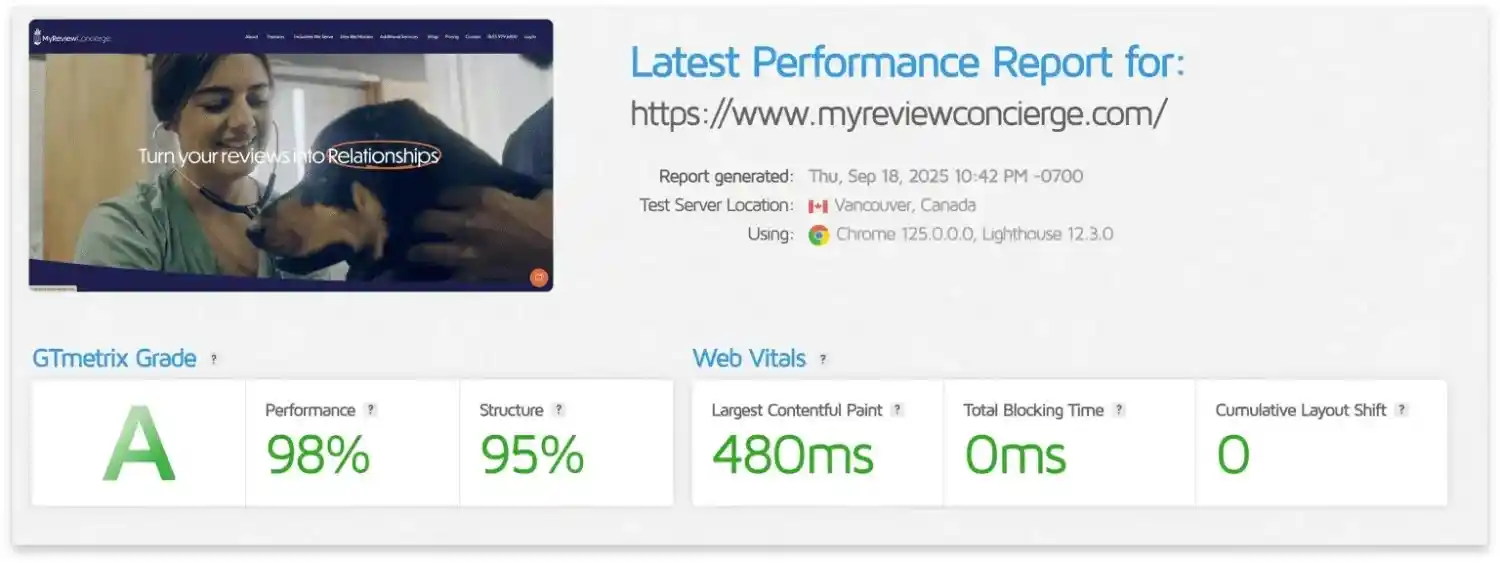
Post-optimization reports showed consistent improvements across all major performance indicators:
- Performance Grade: D → A
- Overall Speed Score: 55% → 95%
- Largest Contentful Paint (LCP): 4.5s → 1.8s
- Fully Loaded Time: 6.2s → 2.9s
- Time to First Byte (TTFB): 1.8s → 450ms
- Page Size: 3.8MB → 1.5MB
- Total Requests: 89 → 55
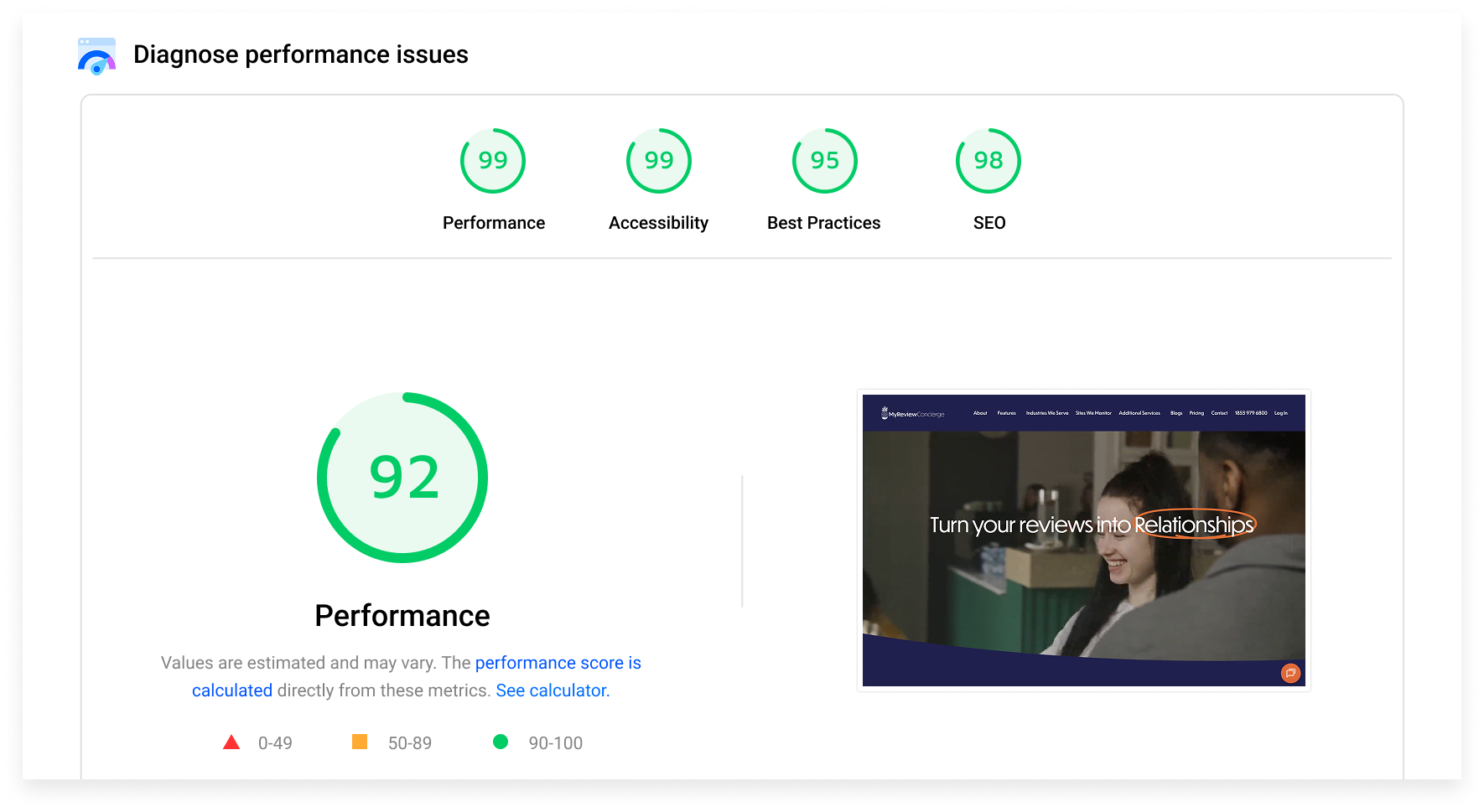
These results improved user experience, interaction readiness, and SEO performance consistency.
What This Case Study Demonstrates About Performance Optimization
This case study shows that sustainable speed improvements come from a structured, system-level approach rather than isolated fixes.
Well-optimized performance ensures:
- Predictable page behavior under load
- Strong alignment with Core Web Vitals
- A smoother, more responsive user experience
Conclusion
By addressing key challenges such as image optimization, caching, JavaScript handling, server performance, and third-party requests, we successfully improved the website’s GTMetrix speed test scores. Our tailored solutions resulted in faster load times, improved user engagement, and a boost in SEO performance.
If your website struggles with speed, let’s collaborate to create a faster, more efficient platform. Contact Arissa International today to improve its performance!
Frequently Asked Questions (FAQs)
A GTMetrix Grade A with stable Core Web Vitals (LCP under 2.5s and low TTFB) is generally considered strong for SaaS and high-traffic platforms.
Speed Tests should be run after major updates and periodically, monthly or quarterly, to detect performance regressions.
Yes. GTMetrix metrics align closely with Core Web Vitals, which influence search rankings and crawl efficiency.
No. They directly affect users by reducing wait times, improving interaction readiness, and delivering a smoother browsing experience.
Yes. Optimized GTMetrix performance improves scalability, reduces server strain, and maintains consistent performance during traffic spikes.