

What Is Lead Generation in Healthcare?

Lead generation in healthcare is the process of attracting and converting patients, healthcare buyers, investors, referral partners, and decision-makers into qualified opportunities through SEO, content marketing, advertising, referrals, CRM automation, and relationship-building strategies.
Effective healthcare lead generation helps organizations:
- Increase patient acquisition
- Generate qualified sales opportunities
- Strengthen referral networks
- Improve marketing ROI
- Build long-term trust
Lead generation in healthcare is the structured process of attracting, qualifying, and converting prospective patients, investors, strategic partners, referring physicians, and institutional buyers into trusted relationships. What that looks like depends on who you’re serving:
- For a hospital, a lead might be a patient inquiring about a service line
- For a clinical-stage biotech, a venture fund requesting a deck
- For a private practice, a referring physician exploring a partnership
Healthcare organizations face unique challenges that make lead generation significantly more complex than other industries. Regulatory requirements, long decision cycles, multiple stakeholders, and the need to establish trust before conversion all influence how successful healthcare marketing programs are designed.
This guide explains how healthcare lead generation works, which strategies deliver results, common mistakes to avoid, and how healthcare organizations can build a sustainable pipeline of qualified opportunities.
The goal: turn interest into a measurable pipeline — without compromising compliance, trust, or privacy.
At Arissa International, we help healthcare organizations build lead-generation systems to address these realities.
Who Needs Healthcare Lead Generation?

Healthcare lead generation applies across multiple sectors:
Hospitals and Health Systems
Generate appointments, referrals, and service-line growth.
Private Practices and Clinics
Attract new patients while improving retention and loyalty.
Healthcare Technology Companies
Generate qualified opportunities with providers, payors, and healthcare organizations.
Medical Device Manufacturers
Connect with procurement teams, clinicians, and distributors.
Biotechnology and Life Sciences Organizations
Attract investors, strategic partners, and research collaborators.
Why Does Lead Generation Matter in Healthcare?
Healthcare organizations increasingly rely on digital channels to generate demand and build trust before a prospect ever speaks with a provider or vendor. Patients research providers online, while healthcare executives often evaluate solutions across multiple touchpoints before engaging with sales teams.
Organizations that invest in healthcare SEO, educational content, marketing automation, and lead nurturing are better positioned to attract qualified opportunities and create predictable pipeline growth.
Without qualified leads, even the strongest healthcare brands stall. Lead generation directly impacts:
- Acquisition — a pipeline full of qualified inquiries
- Revenue — stronger financials for providers, faster funding for innovators
- Authority — consistent visibility in a crowded, trust-driven market
- Relationships — leads that become loyal patients, repeat partners, and continued investors
In healthcare, the quality and trust of each lead matter more than volume, which is why understanding what makes healthcare different must come before any tactic.
Healthcare buying journeys increasingly begin online. Patients research symptoms, treatments, and providers before scheduling appointments, while healthcare executives evaluate vendors long before speaking with sales teams. Organizations that consistently generate qualified leads create a predictable growth engine rather than relying solely on referrals or outbound outreach.
What Makes Lead Generation in Healthcare More Difficult Than Other Industries?
Four realities shape every healthcare lead generation strategy.
Regulation. HIPAA governs patient data, FDA rules constrain what innovators communicate, MLR review gates HCP-facing content, and the Sunshine Act shapes pharma–prescriber engagement, deciding which tactics are even possible.
Trust. Credibility — not price or features — is the foundation of every healthcare decision, forming long before capability enters the conversation.
Long, multi-stakeholder cycles. B2B healthcare decisions routinely take 12–24 months and involve 6–10 evaluators. Patient decisions are shorter but rarely solo.
Stakeholder diversity. Patients, prescribers, investors, payors, partners, and referrers each need different content, channels, and cadence.
Why Trust Matters More in Healthcare
Unlike many industries, healthcare decisions often involve personal well-being, organizational risk, financial investment, or patient outcomes. As a result, prospects typically require significantly more evidence, validation, and reassurance before making a decision.
What Does the Healthcare Lead Generation Funnel Look Like?

Healthcare lead generation moves through five stages, driven by long cycles and high trust:
- Awareness — discovery through search, content, or referrals
- Consideration — comparison via blog posts, case studies, service pages
- Evaluation — review of demos, clinical data, security, ROI
- Decision — appointments booked, partnerships signed, investments committed
- Retention — ongoing engagement that strengthens loyalty and lifetime value
Each stage requires different content, messaging, and calls-to-action. Educational content supports awareness, while case studies, demos, consultations, and assessments help prospects move toward a decision.
Why Healthcare Lead Generation Often Fails
Many healthcare organizations invest heavily in marketing but struggle to generate qualified opportunities because:
- Marketing and sales teams operate independently
- CRM systems lack healthcare-specific workflows
- Lead nurturing stops after the initial inquiry
- Compliance concerns delay campaigns
- Attribution is incomplete or inaccurate
- Content focuses on services rather than buyer questions
As a result, organizations often generate activity without generating meaningful pipeline growth.
If your healthcare marketing is generating activity but not a qualified pipeline, the issue may be your funnel, CRM, attribution, or nurture infrastructure. Arissa International can help identify where leads are leaking and what to fix first.
Need help identifying where leads are leaking from your healthcare funnel? Request a free healthcare lead generation audit from Arissa International.
What Are the Top Lead Generation Strategies for Healthcare?
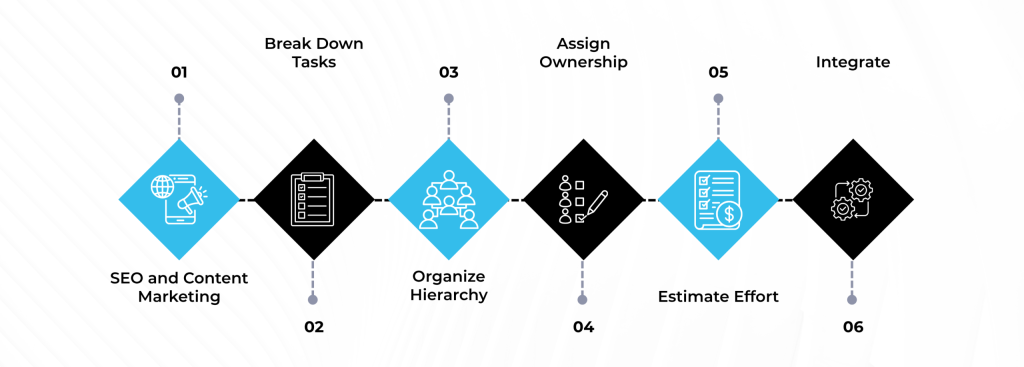
Effective lead generation isn’t running every tactic — it’s running the right ones for your audience and funnel stage.
Organizations that publish educational content addressing patient questions, healthcare buyer concerns, industry trends, and operational challenges often generate consistent organic traffic and qualified inquiries over time.
SEO and content marketing. Intent-based long-tail keywords, local SEO, and E-E-A-T-structured content for hospitals and practices; enterprise SEO around investor-facing queries for innovators.
Paid advertising. Google Ads for high-intent treatment searches; LinkedIn Ads for B2B; ABM to focus budget on the funds, health systems, or specialists that matter most.
Email marketing and automation. HIPAA-compliant sequences across long cycles — patient education, milestone updates, referral nurture.
Social media. LinkedIn dominates B2B healthcare; Facebook and Instagram support patient-facing audiences.
Lead magnets and gated content. Whitepapers, webinars, ROI calculators and clinical-data deep dives capture qualified interest.
Strategic partnerships. Referral networks, co-branded webinars, and institutional collaborations leverage existing trust to shorten cycles.
These work only with the right operational practices.
Healthcare Lead Generation Technology Stack
Many healthcare organizations combine CRM platforms, analytics tools, advertising platforms, marketing automation systems, and patient engagement software to create a unified lead-generation ecosystem.
Modern healthcare organizations often rely on multiple systems to manage lead generation and nurturing:
- HubSpot
- Salesforce Health Cloud
- Google Analytics
- Google Search Console
- LinkedIn Ads
- Google Ads
- Marketing automation platforms
- HIPAA-compliant form solutions
- Patient engagement platforms
The right technology stack helps organizations improve visibility, automate follow-up, track performance, and increase conversion rates.
What Are the Best Practices for Healthcare Lead Generation?
Beyond tactics, certain practices determine whether lead generation performs:
- Persona development. Detailed buyer personas built from research — demographics, decision triggers, pain points
- Sales–marketing alignment. Joint MQL/SQL thresholds and feedback loops keep the funnel honest
- Marketing automation. HIPAA-compliant tools handle segmentation and nurturing at scale
- AI and personalization. Predictive scoring identifies high-intent prospects; AI tailors content to behavior
- Website performance. Slow-loading websites can reduce form submissions, appointment bookings, and overall conversion rates.
- Omnichannel consistency. A consistent experience across email, social, search, and direct outreach
- Data and Attribution. Healthcare organizations should implement proper tracking and attribution models to understand which channels generate the highest-quality leads and the strongest long-term return on investment.
How Do You Measure Lead Generation Success in Healthcare?
Impressions and email opens don’t reflect healthcare success. The metrics that matter:
- Cost per Qualified Lead (CPL) — investment to generate a conversion-ready prospect
- Conversion rate by channel — which channels actually deliver
- Pipeline velocity — how fast leads move from inquiry to decision
- Sales cycle length — first touch to signed agreement or appointment
- Patient Acquisition Cost (PAC) and Lifetime Value (LTV) — long-term ROI for hospitals and practices
Additional Metrics
- Marketing Qualified Leads (MQLs)
- Sales Qualified Leads (SQLs)
- Appointment booking rate
- Referral conversion rate
- Opportunity-to-customer rate
- Revenue attribution
What Are the Most Common Healthcare Lead Generation Mistakes?
Even well-resourced teams trip on the same issues:
- Generic CRMs that can’t model healthcare-specific lead types
- HIPAA and FDA compliance are treated as an afterthought
- Uniform nurture sequences across very different audiences
- Ignoring attribution because tracking under regulation feels hard
- Optimizing for volume instead of qualified quality
- Weak calls-to-action
- Slow website performance
- Lack of conversion tracking
- Failure to nurture leads throughout long buying cycles
Most are avoidable with the right systems — and that’s where we come in.
What to Look for in a Healthcare Lead Generation Partner
Healthcare organizations should evaluate providers based on:
- Healthcare industry experience
- Compliance knowledge
- CRM expertise
- Marketing automation capabilities
- Analytics and attribution processes
- SEO and content strategy expertise
- Multi-stakeholder marketing experience
Choosing the right partner can significantly reduce acquisition costs and improve lead quality.
Why Healthcare Organizations Choose Specialized Marketing Partners
Healthcare marketing requires a combination of regulatory awareness, CRM expertise, analytics, content strategy, marketing automation, and multi-stakeholder communication. Organizations often work with specialized partners to accelerate growth while maintaining compliance and visibility across complex buyer journeys.
How Arissa International Helps Healthcare Organizations Generate Qualified Leads
At Arissa International, we help hospitals, healthcare providers, medical practices, healthcare technology companies, and life sciences organizations build predictable lead-generation systems.
Our healthcare marketing services include:
- Healthcare SEO
- GEO and AI search optimization
- Website conversion optimization
- HubSpot CRM implementation
- Marketing automation
- Paid advertising
- Account-Based Marketing (ABM)
- Content strategy
- Lead nurturing workflows
- Analytics and attribution
Rather than focusing on traffic alone, we focus on generating qualified opportunities that support measurable business growth.
Ready to Improve Healthcare Lead Generation?
Whether you’re a hospital looking to increase patient acquisition, a healthcare technology company targeting providers, or a life sciences organization seeking investors and strategic partners, a structured lead-generation system can create predictable growth.
Frequently Asked Questions (FAQs)
It’s the process of identifying patients or organizations interested in healthcare services. It drives patient volume, trust, and revenue in a competitive market.
Yes. Capturing or storing Protected Health Information (PHI) — through forms, pixels, emails, or CRMs — must be HIPAA-compliant. Most generic marketing tools aren’t.
B2C leads are individuals seeking care, like a patient booking a consultation. B2B leads are decision-makers — hospital administrators evaluating technology, software, or services.
A qualified lead has expressed a clear need and shown intent — like filling out a contact form, requesting a quote, or scheduling a consultation.
Optimize your website with clear CTAs, leverage local SEO, publish educational content, and engage on social media. Together, these build credibility and convert interest into appointments.
Google Ads and SEO capture intent-driven traffic; LinkedIn targets B2B; Facebook and Instagram support community, patient education, and reputation.
Content like blogs, videos, and patient testimonials builds the authority and trust needed to convert healthcare leads into long-term relationships.
Yes — but focus on reputation and education, not high-pressure sales. Always comply with local patient privacy regulations.
A healthcare CRM manages patient inquiries, referring physicians, KOLs, and investors while staying HIPAA-compliant. It centralizes communication, tracks lead status, and automates follow-up.
A CRM tool tracks interactions, automates follow-up emails, and manages appointment bookings — turning manual outreach into scalable lead nurturing.
Paid ads deliver leads in weeks; SEO and content marketing need 6–9 months to gain traction; B2B healthcare deals can take 12–24 months from first touch to signed agreement.
Budgets typically range from 5% to 20% of expected revenue from new patients or clients. The right mix depends on growth goals, sales cycle length, and the prioritized channels.
Use retargeting ads to re-engage website visitors, offer a fast and user-friendly booking experience, and follow up with prospects quickly and consistently.
Targeting too broad an audience, lacking clear CTAs on the website, and ignoring social media for community building — each one quietly leaks leads at the top of the funnel.
When in-house resources can’t keep pace with growth goals, compliance is slowing campaigns, lead quality has plateaued, or you’re entering a new audience, such as B2B or a pre-commercial launch.
A healthcare marketing agency helps organizations generate qualified opportunities through SEO, content marketing, paid advertising, CRM automation, lead nurturing, analytics, and conversion optimization.
Popular healthcare CRM platforms include
HubSpot, Salesforce Health Cloud, and other HIPAA-capable solutions. The right choice depends on compliance requirements, workflow complexity, reporting needs, and growth goals.
Costs vary depending on audience, competition, geographic targeting, and marketing channels. Most organizations invest in a mix of SEO, advertising, automation, and content marketing.
SEO, Google Ads, LinkedIn advertising, referral programs, marketing automation, and educational content typically generate the highest-quality healthcare leads.