
PPC for Manufacturers is one of the fastest ways to get your products in front of the buyers actively searching for them. Unlike organic methods that take months to build, paid search puts you at the top of the results today – in front of engineers, procurement teams, and decision-makers with real buying intent. Used well, it delivers targeted traffic, qualified leads, and measurable ROI. In this article, you will learn what it is and the six benefits that make it worth the spend.
Quick answer: Manufacturing PPC (pay-per-click) lets you bid on the exact terms industrial buyers search, so your ad appears at the top of Google or LinkedIn – and you pay only when someone clicks. The result is fast, high-intent leads you can measure from day one.
What Is PPC for Manufacturers?
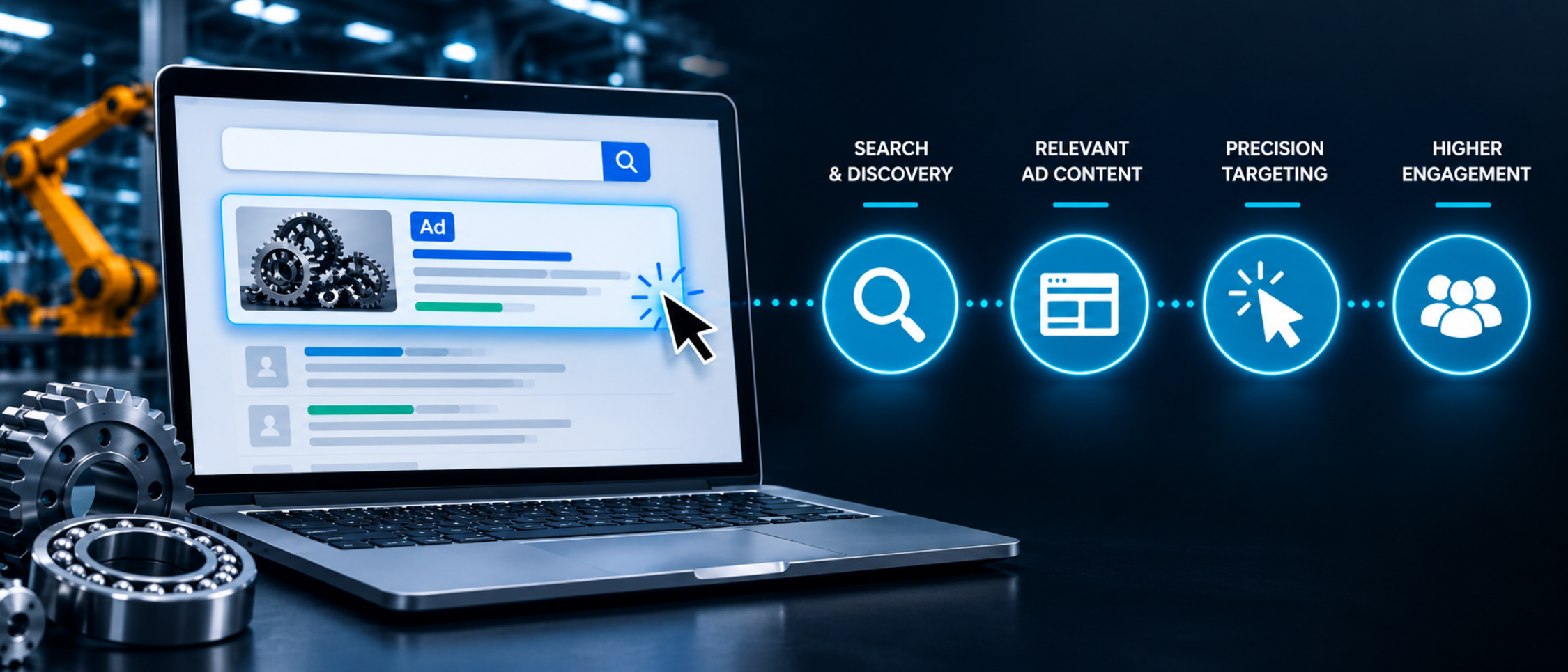
PPC for Manufacturers is a paid advertising model where industrial companies bid on specific keywords and pay only when a prospect clicks their ad. Consequently, instead of waiting months to rank organically, you appear at the top of search results immediately – directly in front of buyers who are actively sourcing suppliers. Because you target intent-driven, specification-based searches, the traffic tends to be highly qualified rather than broad.
Why PPC for Manufacturers Works
Industrial buying is high-value, considered, and search-driven – which is exactly what paid search is built for. Moreover, manufacturers can concentrate budget on high-intent keywords (like “precision CNC machining supplier”), filter out unqualified clicks with negative keywords, and use remarketing to stay visible across long sales cycles. As a result, every dollar works harder. In fact, Google’s own advertiser data puts the average return at roughly $2 in revenue for every $1 spent on Google Ads – a benchmark well-run industrial campaigns often aim to beat.
PPC vs SEO for Manufacturers
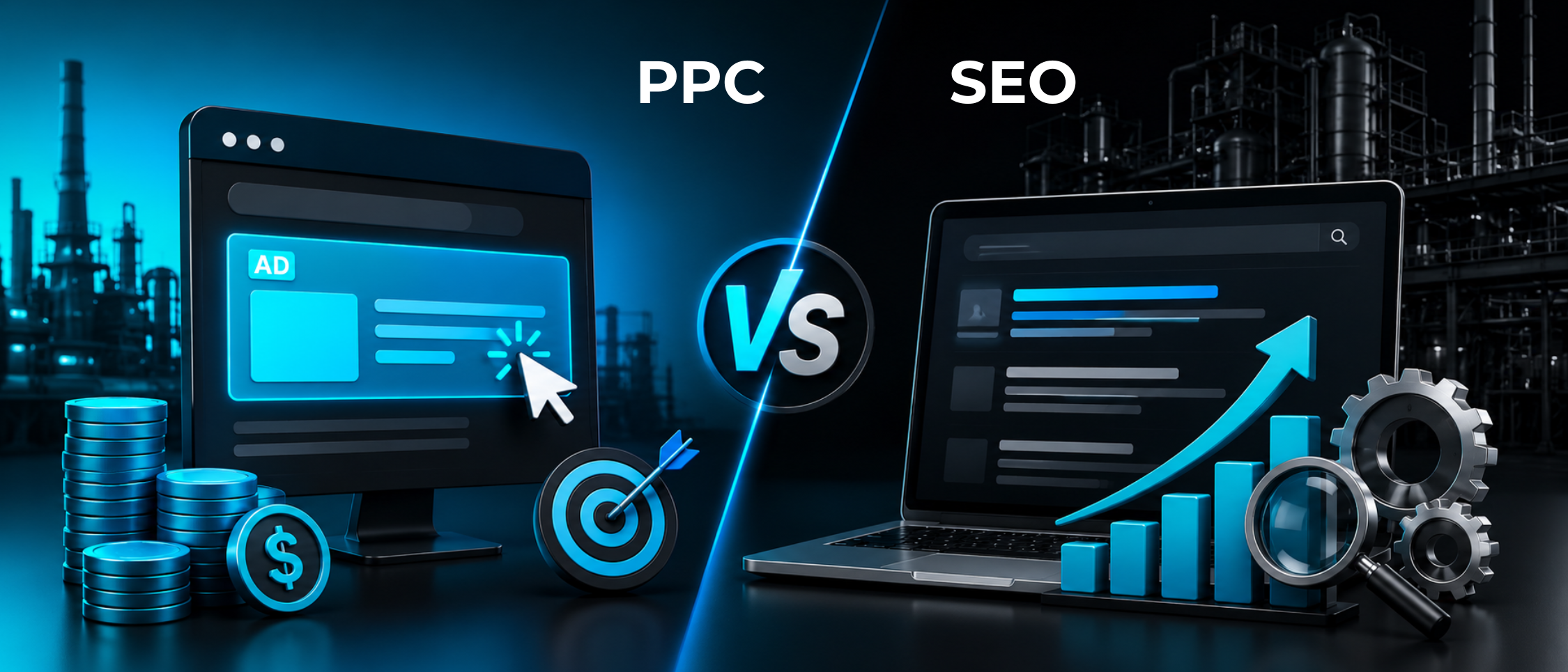
PPC and SEO are not rivals – they solve different problems. Paid search buys immediate visibility at the top of the results, while SEO earns lasting organic rankings over time. Consequently, most manufacturers benefit from running both: PPC fills the pipeline now, and SEO compounds value later. The table below shows how they compare.
| Factor | PPC (Paid Search) | SEO (Organic) |
|---|---|---|
| Speed to results | Immediate | 6 to 12 months |
| Cost model | Pay per click | Time and content investment |
| Traffic when you stop | Stops with spend | Keeps coming |
| Best for | Quick leads, launches and testing | Long-term visibility and trust |
| Placement | Top "Sponsored" slots | Organic results below the ads |
6 Benefits Manufacturers Gain From PPC
1. Cost-Efficiency – You Pay Only for Clicks
With PPC, you pay only when someone actually clicks, so your budget goes toward genuinely interested prospects rather than passive impressions. Therefore, a well-optimized campaign – tight keywords, a strong quality score, and sharp landing pages – keeps your cost per lead low and your ROI high.
2. Full Budget Control
You set daily and monthly caps, so spend never runs away from you. Whether you run a small shop or a large enterprise, you can start lean, prove ROI on a few campaigns, and then scale only what works.
3. Precise, High-Intent Targeting
PPC lets you target by keyword, location, device, and even job role on LinkedIn. As a result, your ads reach the procurement managers and engineers actively searching for your products – not a broad, untargeted audience.
4. Brand Exposure That Compounds
Even when buyers don’t click, your name sits at the top of the results, building familiarity. Over a long industrial sales cycle, that repeated visibility helps you make the shortlist when buyers are finally ready to act.
5. Immediate, Measurable Results
Unlike SEO, PPC delivers traffic the day it launches – and every click is trackable. Consequently, you can see what’s working in real time and adjust keywords, copy, or bids without waiting weeks for data.
6. Flexibility to Test and Adapt
PPC lets you test ad copy, offers, and audiences quickly, then double down on the winners. So when you launch a new product or enter a new market segment, you can pivot campaigns in days rather than quarters.
How to Set Up a Manufacturing PPC Campaign
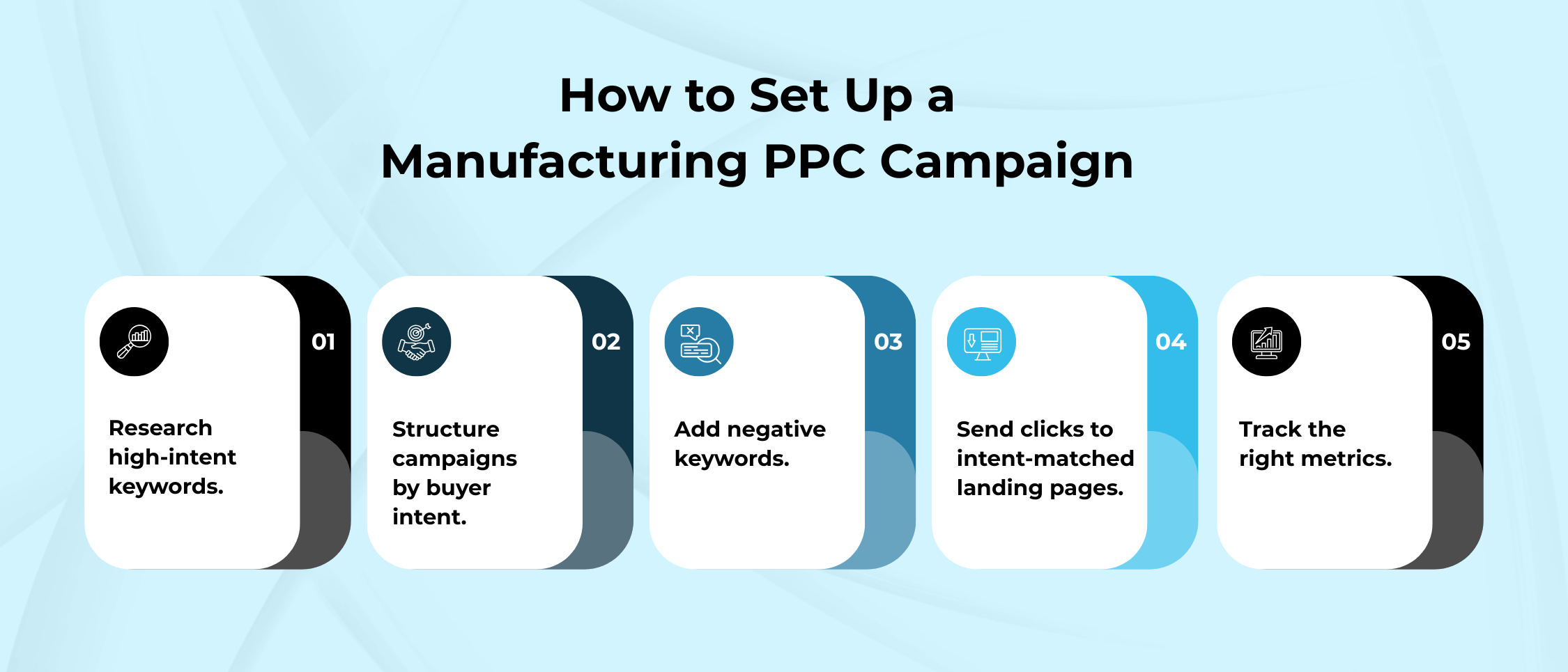
Launching paid search doesn’t have to be complicated. Follow these five steps to build a campaign that reaches real buyers, not random clicks.
- Research high-intent keywords. First, target specification-based, long-tail terms buyers actually use – like “industrial valve supplier” – rather than broad industry words.
- Structure campaigns by buyer intent. Next, group keywords by where buyers are in their search, from early research to ready-to-quote.
- Add negative keywords. Then filter out job seekers, students, and DIY traffic so your budget reaches qualified prospects.
- Send clicks to intent-matched landing pages. Instead of pointing ads to your homepage, build dedicated pages that match each search and make it easy to request a quote.
- Track the right metrics. Finally, measure cost per lead, click-through rate, and quote requests – then optimize bids and copy based on the data.
How Arissa International Helps Manufacturers Win With PPC
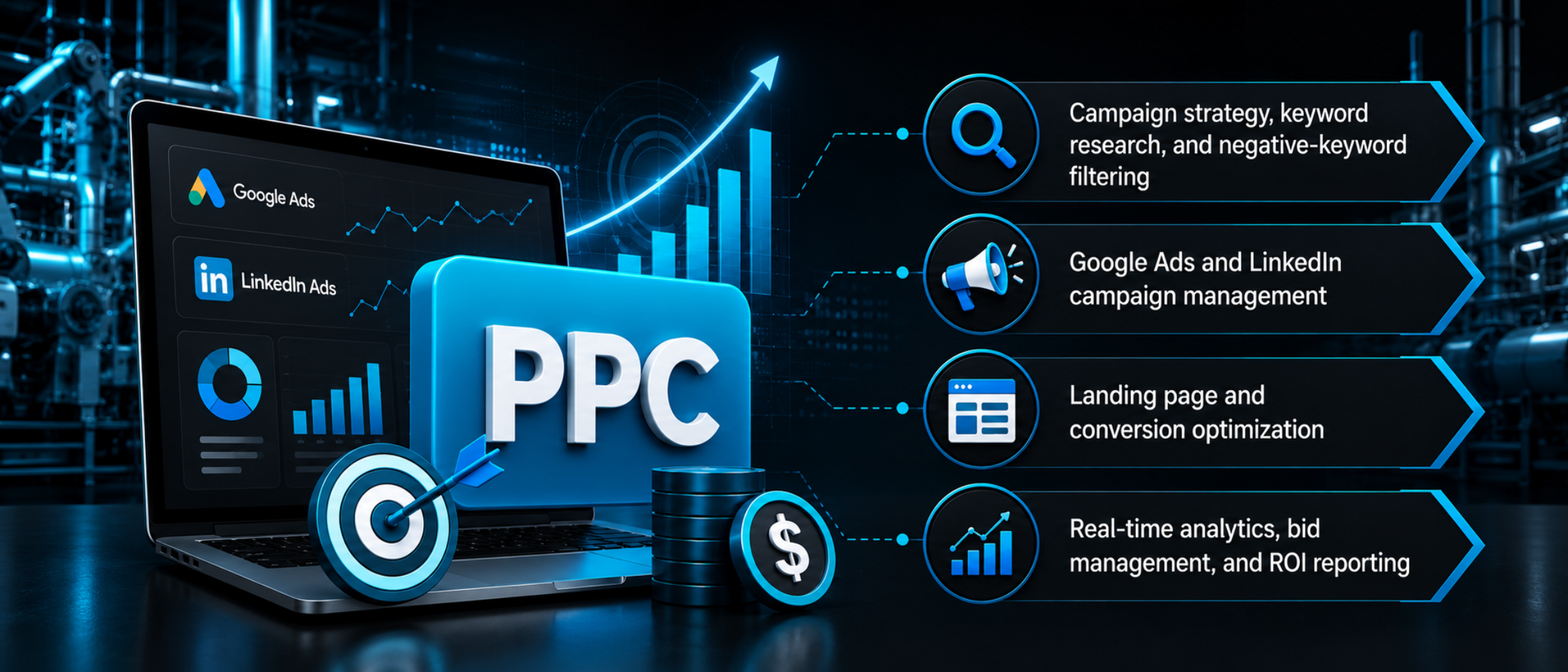
Paid search rewards constant optimization – and that is where many in-house teams run out of time. As a digital marketing agency, Arissa International manages industrial PPC end-to-end, from keyword strategy to landing pages built to convert.
Our manufacturing PPC services include:
- Campaign strategy, keyword research, and negative-keyword filtering
- Google Ads and LinkedIn campaign management
- Landing page and conversion optimization
- Real-time analytics, bid management, and ROI reporting
Frequently Asked Questions (FAQs)
It targets high-intent, specification-based searches and long B2B sales cycles, using negative keywords and remarketing to reach engineers and procurement teams rather than mass consumers.
It varies with competition and keywords, so most manufacturers start with a modest test budget and scale based on cost per lead rather than a fixed monthly figure.
Google Ads is strongest for high-intent product searches, while LinkedIn is ideal for targeting engineers and procurement teams by role, industry, and company.
Yes. PPC complements them by capturing buyers who are actively searching between events, so you stay visible exactly when they are ready to source.
Yes. Remarketing keeps your brand in front of buyers across months-long evaluations, so you stay top-of-mind until they are ready to request a quote.
It depends on your team’s time and expertise; many manufacturers work with a specialist like Arissa International to manage bidding, targeting, and landing pages.