

Choosing a marketing automation platform is a high-stakes decision, and the HubSpot vs Pardot debate sits right at the center of it. Both tools automate email, nurture leads, and score prospects — yet they’re built for very different teams. First, one quick clarification: Salesforce renamed Pardot to Marketing Cloud Account Engagement (MCAE) in 2022, though most marketers still call it Pardot, so we’ll use “Pardot” throughout.
Here’s the short answer: HubSpot fits small and mid-sized teams that want an easy, all-in-one platform, while Pardot suits enterprises already running Salesforce CRM. Below, we compare pricing, usability, lead management, and more, so you can decide with confidence.
HubSpot vs Pardot: A Side-by-Side Comparison
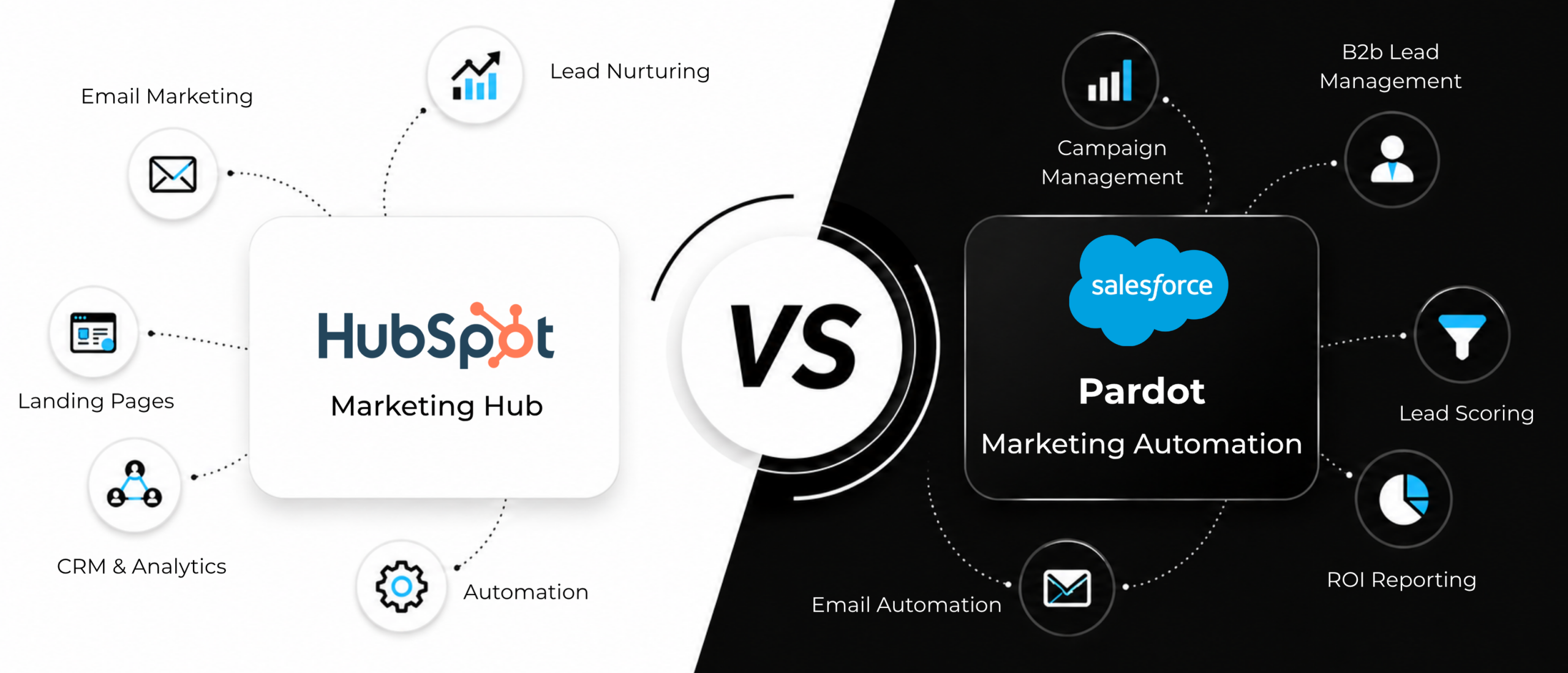
Before we dig into the details, here’s the quick verdict at a glance:
| Factor | HubSpot Marketing Hub | Pardot (MCAE) |
|---|---|---|
| Best for | Small & mid-sized businesses | Enterprises on Salesforce CRM |
| Pricing* | Free tier, then affordable paid plans | No free tier, enterprise-level pricing |
| Ease of use | Very high — modern, intuitive UI | Steeper learning curve |
| Native CRM | Built-in HubSpot CRM | Requires a separate Salesforce CRM |
| Core strength | All-in-one inbound + AI across plans | Deep Salesforce integration & B2B lead scoring |
| Setup time | Days to weeks | Weeks to months |
*Confirm current pricing on each vendor’s site — rates change frequently.
As the table shows, these platforms rarely compete for the same buyer. Therefore, the right choice depends far more on your company size and existing tech stack than on a feature checklist.
Pricing: Where the Gap Is Widest
Pricing is the clearest dividing line. HubSpot starts free, then scales through its Starter, Professional, and Enterprise plans, so teams can grow into higher tiers as their needs expand. Pardot, by contrast, has no free tier and starts at an enterprise price point — and it requires a Salesforce CRM license on top of that.
Consequently, for the same contact volume, HubSpot almost always costs significantly less. So if budget drives your decision, HubSpot wins early. However, enterprises already paying for Salesforce may find Pardot’s cost easier to justify, because it folds neatly into an ecosystem they already own.
Ease of Use: Getting to Value Faster
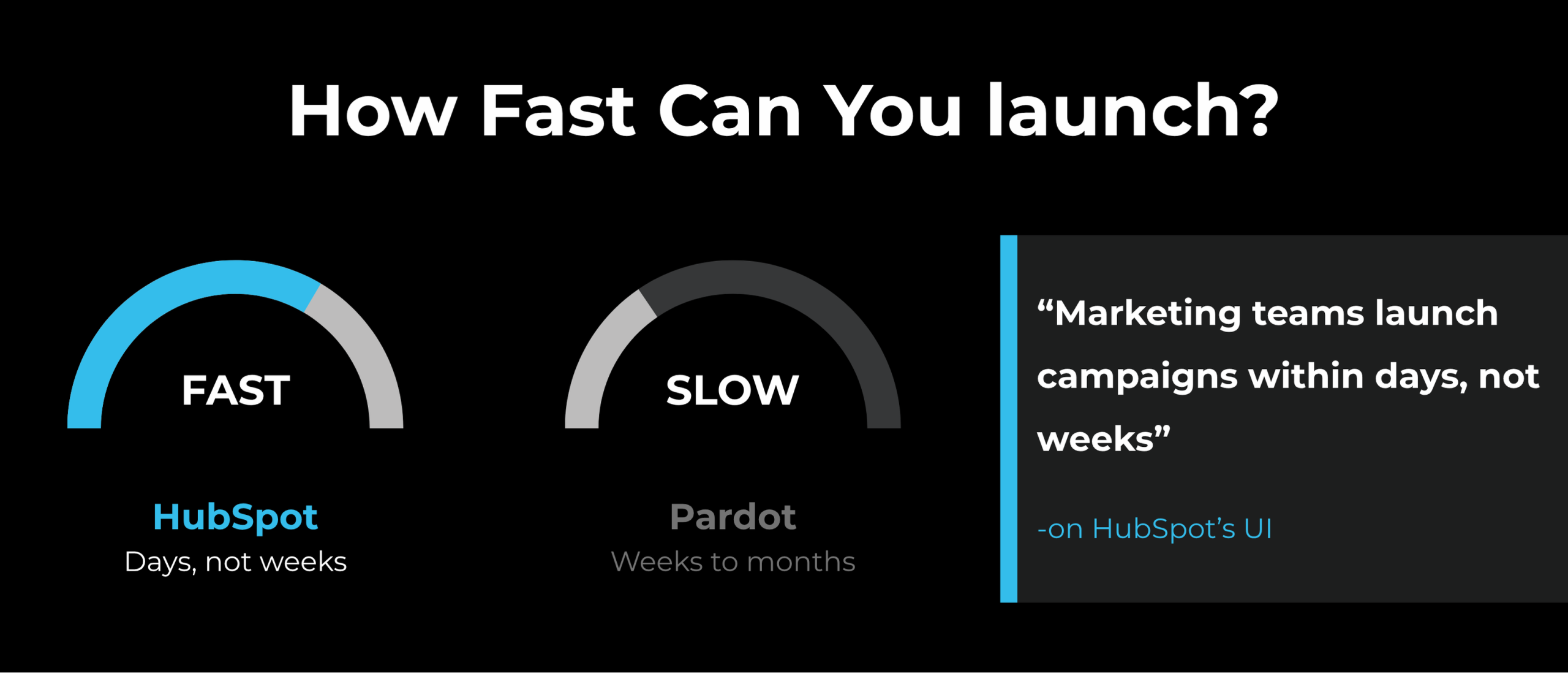
HubSpot built its reputation on a clean, modern interface that new users navigate almost immediately. As a result, marketing teams launch campaigns within days rather than weeks. Pardot, on the other hand, packs powerful B2B features but comes with a steeper learning curve. It rewards experienced Salesforce admins, but smaller teams often need training — or outside help — before they feel fluent.
Lead Management and Nurturing
Both platforms handle lead management well, though they approach it differently. HubSpot uses visual workflows, email sequences, and dynamic content, all of which are synced in real time with its built-in CRM. Pardot counters with Engagement Studio, plus advanced lead scoring and grading that prioritize prospects based on behavior and fit. For complex, multi-touch B2B funnels tied to Salesforce, Pardot’s scoring depth gives it a genuine edge.
Reporting and Attribution
Numbers decide budgets, so reporting often makes or breaks the choice. HubSpot delivers clean, customizable dashboards straight out of the box, and most marketers build the reports they need without help. Pardot, however, leans on Salesforce’s reporting engine, which unlocks deeper multi-touch attribution and pipeline analysis once it’s configured. Therefore, if you want fast, friendly insights, HubSpot wins; but if you need granular revenue attribution tied to Salesforce opportunities, Pardot pulls ahead.
Salesforce Integration: Pardot's Home Turf
If your business runs on Salesforce, this category tilts heavily toward Pardot. Because Pardot lives within the Salesforce ecosystem, it natively syncs leads, campaigns, and ROI data — no third-party connector required. HubSpot integrates with Salesforce, too, and the connection is solid, but it serves as a bridge between the two systems rather than a unified platform.
Integrations and Ecosystem
Beyond Salesforce, the wider ecosystem favors HubSpot. Its App Marketplace lists well over a thousand connectors — plus built-in tools for ads, live chat, and more — so most teams plug in their stack without custom work. Pardot, meanwhile, draws its strength from staying close to Salesforce; its third-party options are lighter, and it relies on the broader Salesforce platform to fill the gaps. Therefore, if you want breadth and plug-and-play simplicity, HubSpot leads; but if your stack already revolves around Salesforce, Pardot keeps everything in one family.
Social Media Tools
Social management is another clear gap. HubSpot includes a built-in scheduler for publishing, monitoring, and reporting across networks from one place. Pardot, by contrast, offers only limited social posting and relies on the broader Salesforce ecosystem for more, so social-first teams will find HubSpot far more capable.
AI Capabilities: The New Tiebreaker
AI has quickly become a real differentiator. HubSpot now bakes AI tools — content assistance, predictive lead scoring, and chatbots — into every paid plan, so even small teams benefit right away. Salesforce answers with Einstein AI across Pardot and the wider ecosystem, though its most advanced features are reserved for higher tiers and favor existing Salesforce users. As a result, HubSpot gives lean teams faster access to AI, while Salesforce favors enterprises ready to invest in its full stack.
Pros and Cons at a Glance

Still weighing it up? Here’s the honest shortlist for each.
HubSpot — pros: easy to learn, all-in-one CRM, flexible pricing, AI on every paid plan, and fast setup.
HubSpot — cons: costs climb as you add contacts and features, and it offers less depth for complex B2B attribution.
Pardot — pros: powerful B2B lead scoring, native Salesforce integration, deep attribution, and enterprise-grade controls.
Pardot — cons: a steeper learning curve, a higher entry price, and a hard requirement for Salesforce CRM.
The Verdict: Which One Wins?
- Choose HubSpot if you’re a small or mid-sized team that values ease of use, lower cost, an all-in-one CRM, and fast setup.
- Choose Pardot if you’re an enterprise already invested in Salesforce CRM, with complex B2B funnels and the budget to match.
In other words, HubSpot rewards teams that want to move fast and keep things simple, while Pardot rewards teams that want depth inside an ecosystem they already trust. Tellingly, HubSpot consistently earns higher user-satisfaction ratings, while Pardot scores best among Salesforce-heavy teams.
Frequently Asked Questions (FAQs)
Yes. Salesforce rebranded Pardot to Marketing Cloud Account Engagement (MCAE) in 2022. The name changed, but the product and its core features stayed the same.
In a HubSpot vs. Pardot cost comparison, HubSpot almost always comes in lower — it starts free and scales gradually, while Pardot has no free tier, starts at a premium price point, and requires a Salesforce license.
HubSpot. Its free tier, gentle pricing curve, and easy interface make it far friendlier for small teams without a dedicated admin.
Effectively, yes. Pardot is built to run on Salesforce CRM, so it makes the most sense for teams already using — or planning to adopt — Salesforce.
No. There’s no announced sunset date, though Salesforce launched Marketing Cloud Next in 2025 as its newer flagship, so factor the long-term roadmap into your decision.
Conclusion: Get Expert Help Choosing
Ultimately, the HubSpot vs Pardot choice comes down to your size, your budget, and whether you’re committed to the Salesforce ecosystem. Both are excellent marketing automation platforms — the smarter move is to match the tool to your actual goals rather than chase features you’ll never use.
Not sure which fits? Arissa International helps businesses choose, implement, and get real results from the right platform. So book a meeting today, and let’s find your perfect match.