

Digital transformation for manufacturers has shifted from a buzzword to a survival strategy. Today, manufacturers face rising costs, supply chain pressures and buyers who expect speed and transparency. As a result, companies that digitize both their operations and their marketing move faster, waste less, and win more business. In this guide, you will learn what manufacturing digital transformation involves, which technologies matter most, and how to begin without disrupting what already works.
Quick answer: Manufacturing digital transformation means using automation, data analytics, cloud computing, IoT, and AI to improve production, decision-making, and the customer experience — turning a traditional factory into a connected, data-driven business.
What Is Digital Transformation for Manufacturers?
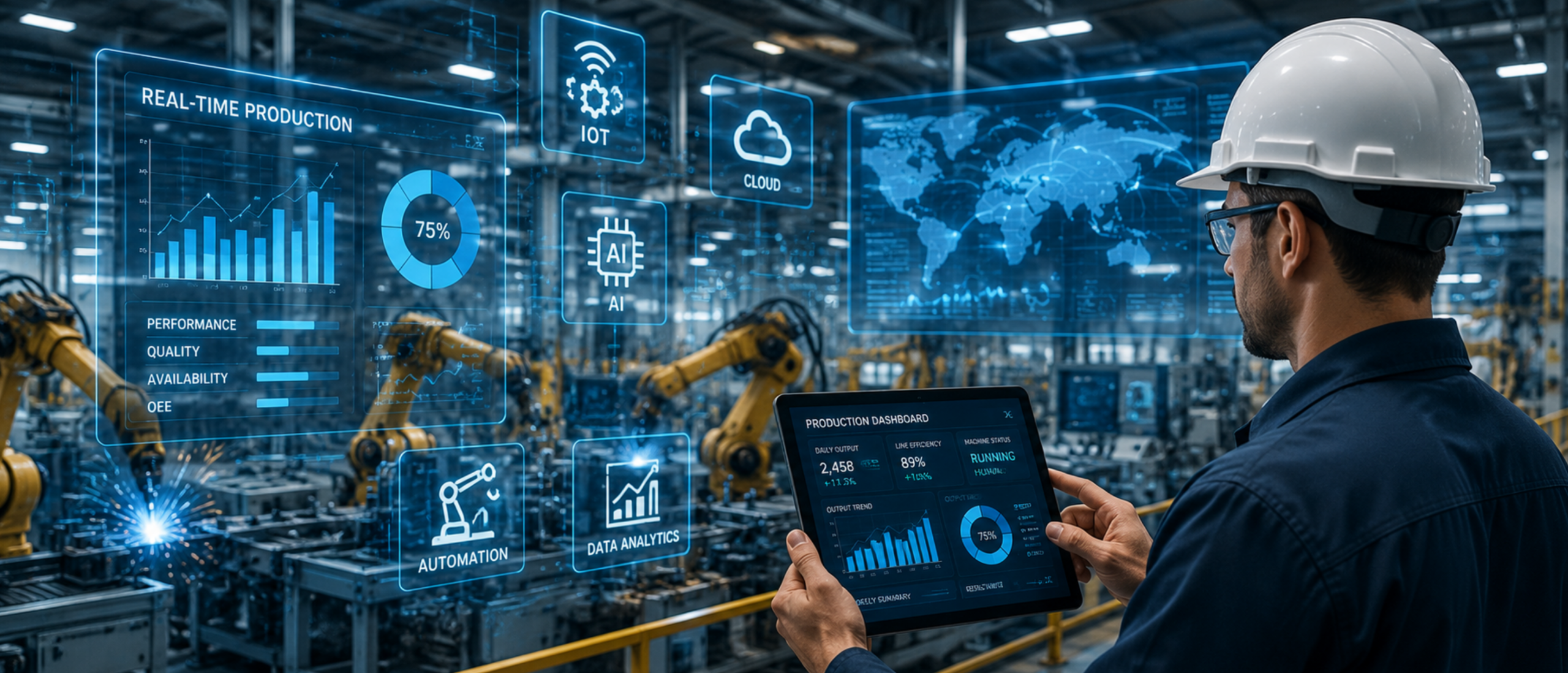
Digital transformation for manufacturers is the process of integrating digital technologies across the entire manufacturing lifecycle — from the factory floor to sales and customer service. In other words, it connects machines, data, and people so a business can operate more efficiently and respond to customers faster.
Unlike a one-time software upgrade, this shift is ongoing. Because it touches production, supply chain, marketing, and company culture, it works best as a long-term strategy rather than a single project.
A typical digital transformation strategy covers:
- Automation and robotics on the production line
- Data analytics and business intelligence for smarter decisions
- Cloud computing for scalable storage and real-time collaboration
- Industrial IoT (IIoT) for connected equipment and supply-chain visibility
- AI for forecasting, quality control, and predictive maintenance
- Digital marketing and CRM to attract, convert, and retain customers
Why Manufacturers Can't Afford to Wait
Buyers, suppliers, and competitors have already gone digital. Consequently, manufacturers that delay risk falling behind on cost, speed, and visibility. For example, a competitor with real-time inventory data can quote faster and win the order before a slower rival even responds.
Moreover, digital transformation for manufacturers directly improves margins. When companies reduce downtime, cut waste, and automate manual work, they free up resources to grow. Early adopters, therefore, tend to become industry leaders, while latecomers spend years catching up.
The Core Pillars of Manufacturing Digital Transformation
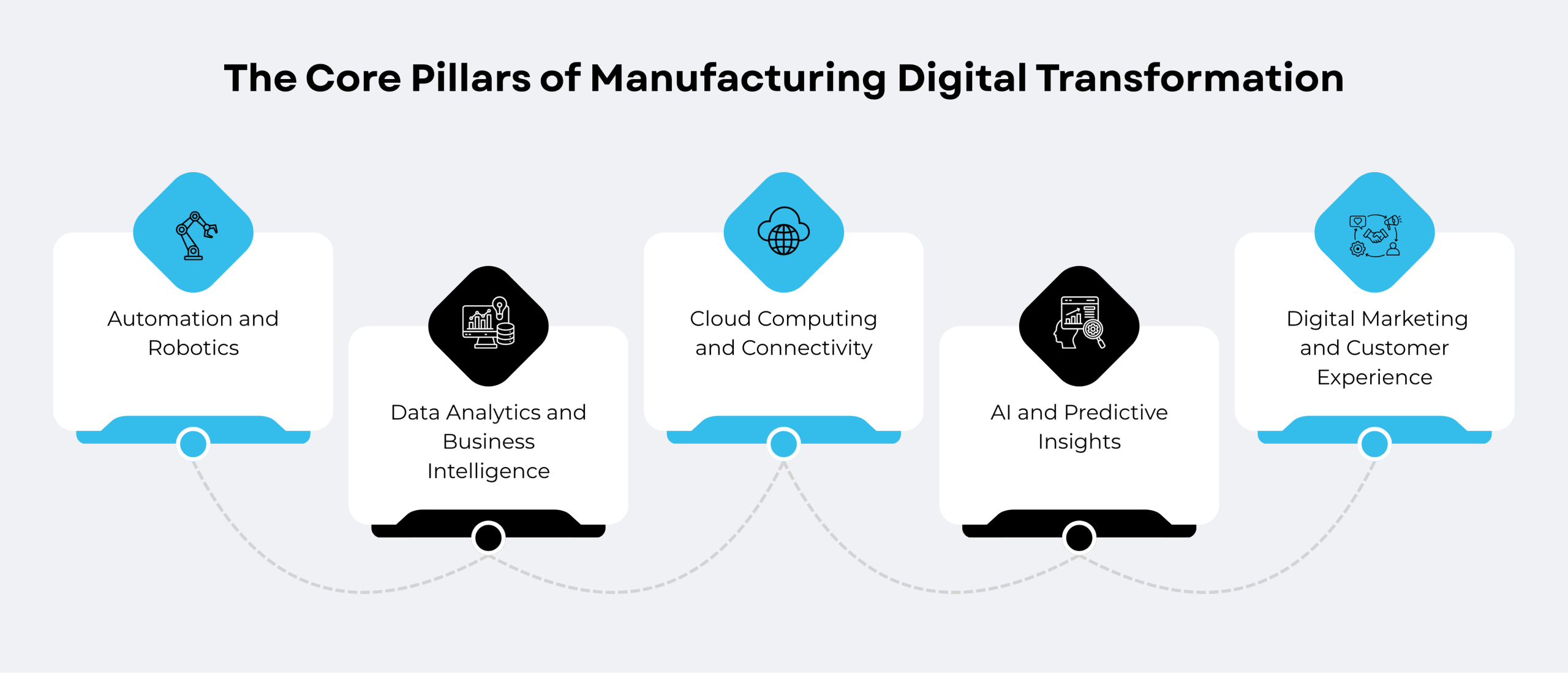
1. Automation and Robotics
First, automation handles repetitive tasks, reduces errors, and boosts output. Robotics now supports everything from assembly to material handling, bringing new precision to the factory floor.
2. Data Analytics and Business Intelligence
Next, advanced analytics turn raw machine and sales data into clear insights. As a result, manufacturers can spot bottlenecks, forecast demand, and make decisions based on evidence rather than guesswork.
3. Cloud Computing and Connectivity
The cloud delivers scalable storage, real-time collaboration, and remote access. In addition, connected IIoT devices keep communication flowing across the entire production ecosystem.
4. AI and Predictive Insights
AI strengthens quality control and enables predictive maintenance, so teams fix issues before they cause downtime. This shift moves manufacturers from reactive firefighting to proactive planning.
5. Digital Marketing and Customer Experience
Finally, smart manufacturing isn’t only about the factory. A strong digital presence — website, SEO, content, and CRM — helps manufacturers attract qualified buyers and convert them efficiently.
Common Challenges (and How to Overcome Them)
Digital change brings real hurdles, but each one is manageable with the right plan:
- Cybersecurity: Connected systems widen the attack surface, so build security in from day one.
- Legacy systems: Integrate with middleware gradually rather than ripping everything out at once.
- Change management: Train teams early and clearly, because adoption depends on people, not just tools.
The Future of Industrial Digital Transformation
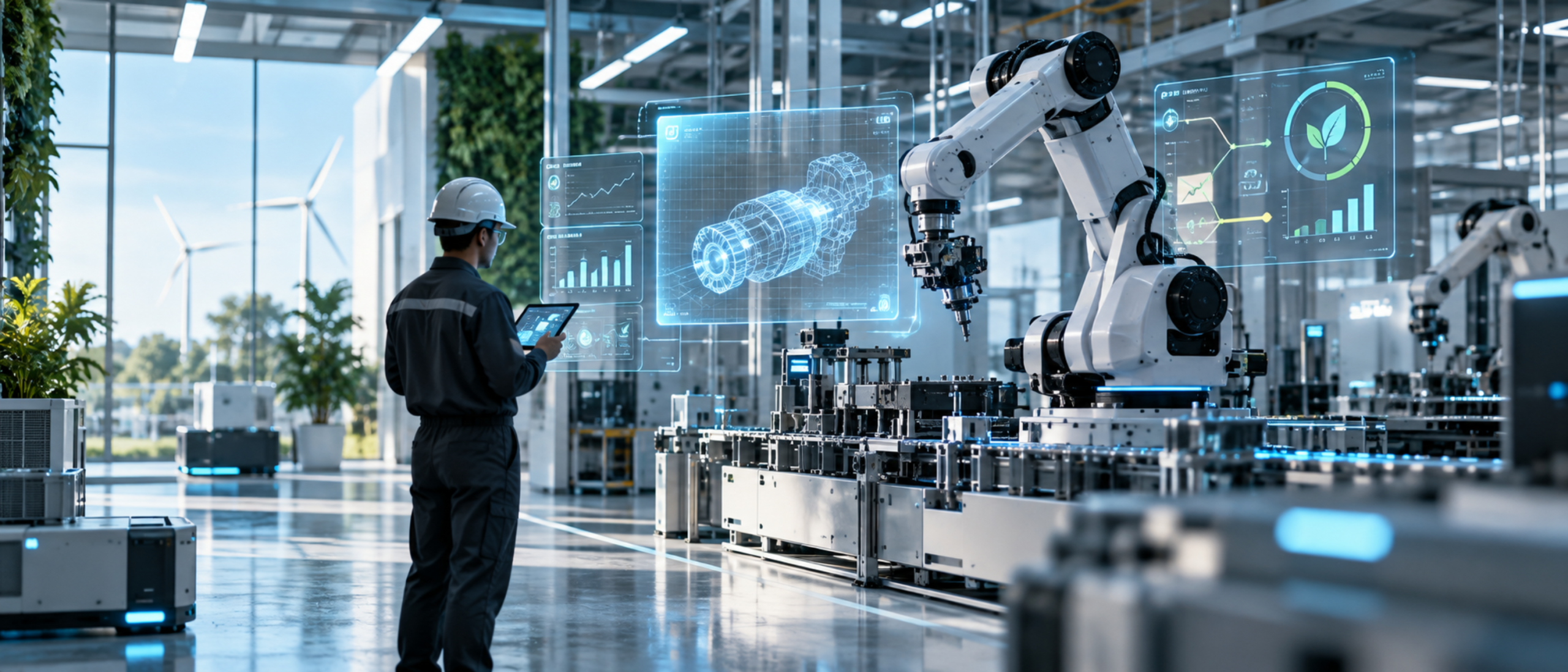
Industrial digital transformation continues to move toward AI, sustainability, and data-driven decision-making. For example, predictive analytics, digital twins, and automated workflows increasingly shape how factories run and how buyers choose suppliers. Brands that adopt these tools early position themselves as leaders rather than followers.
How Arissa International Helps Manufacturers Transform
Arissa International helps manufacturers win the customer-facing side of digital transformation. As a digital marketing agency and HubSpot partner, we integrate strategy, content, automation, and analytics into a single, measurable system that turns digital investment into revenue.
Our services for manufacturers include:
- Digital marketing strategy across SEO, content, and social
- Website design and optimization built to convert
- CRM setup, marketing automation, and lead nurturing
- Brand positioning and demand generation
- Data-driven insights and continuous optimization
Frequently Asked Questions (FAQs)
Higher efficiency, lower costs, better quality, and faster decisions. Industry analysis compiled from McKinsey’s manufacturing research puts the gains at 10–30% higher throughput and up to 50% less machine downtime. Scw
It varies by scope — hardware, software, training, and maintenance. Budget is the top barrier, cited by about 58% of digital leaders, so most start small and scale. Prosci
Digitization converts data to digital form; digitalization improves processes with digital tools; digital transformation reshapes the whole business around digital capabilities.
Industry 4.0 is the broader movement toward smart, connected factories. Digital transformation is how a single manufacturer adopts those technologies in practice.
Track KPIs like OEE, downtime, scrap rate, and cost per unit against a clear baseline. Arissa International helps set up the analytics and dashboards to measure them.