

The real estate industry has evolved rapidly in the digital era. Buyers no longer rely only on newspaper ads or broker referrals to discover properties. Instead, most property searches now begin online through search engines, social platforms, virtual tours, and property portals.
As buyer behavior changes, a strong real estate strategy has become essential for visibility, engagement, and long-term growth. Today’s buyers compare listings, research agencies, and build trust online before scheduling a site visit. Businesses with a consistent digital presence are more likely to attract serious buyers and remain competitive.
What Is a Modern Real Estate Strategy?
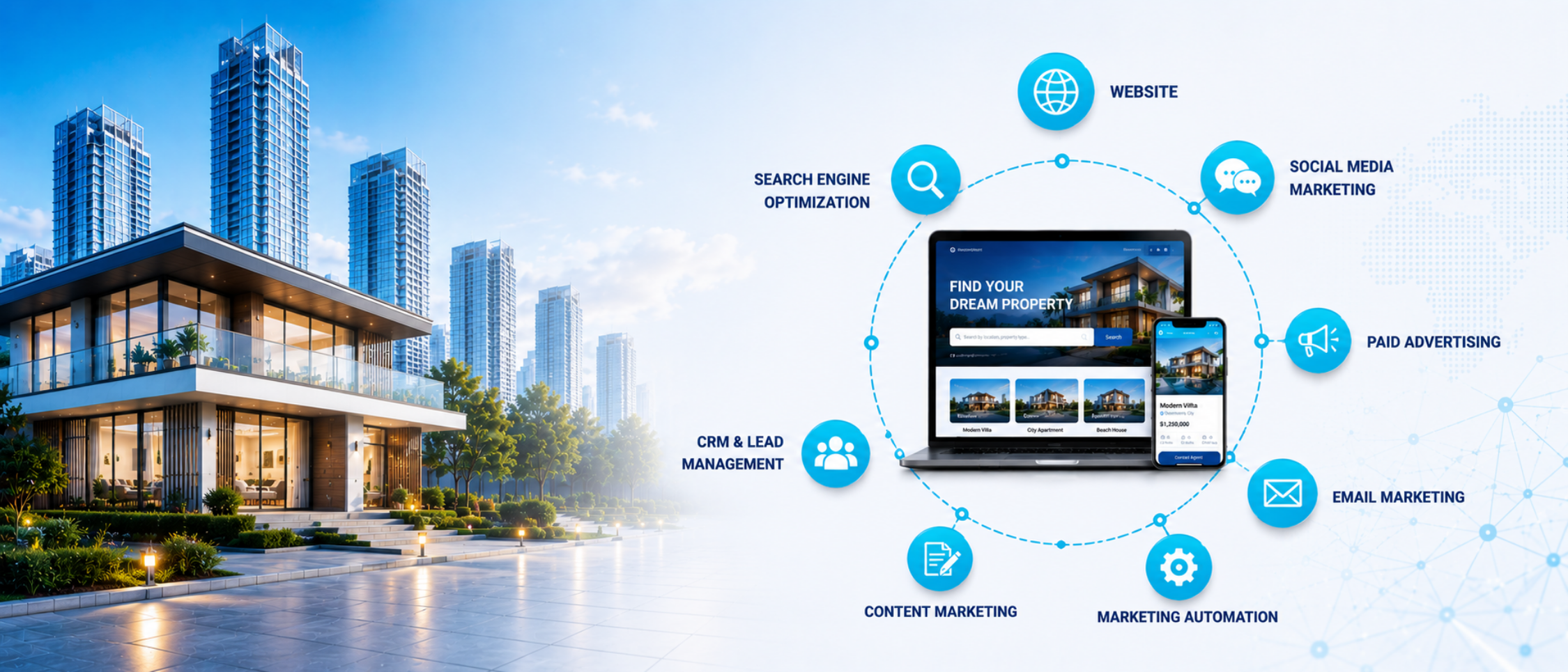
A modern real estate strategy combines digital marketing, branding, content, automation, and customer engagement to improve visibility and generate qualified inquiries.
Instead of relying only on traditional advertising, businesses now use websites, social media, paid campaigns, CRM systems, and search optimization to guide buyers through the decision-making journey.
More importantly, a connected digital strategy helps real estate brands stay visible across multiple touchpoints while improving communication and lead management.
Why Digital Marketing Matters in Real Estate
Digital marketing has transformed how buyers search for properties and interact with real estate brands. Most buyers now evaluate listings, compare options, and research credibility online before making contact.
With the right strategy, real estate businesses can:
- Reach wider audiences
- Improve visibility
- Generate better-quality leads
- Increase engagement
- Build buyer trust
Businesses that fail to adapt often struggle to remain competitive in an increasingly digital marketplace.
Key Benefits of Optimizing Your Real Estate Strategy
Optimizing your real estate strategies is non-negotiable if you want to sustain yourself in today’s market. It can benefit you in more than one way.
Wider Reach and Better Visibility
Digital marketing removes geographic limitations and allows real estate businesses to connect with buyers across different regions and markets.
Through search optimization, social media marketing, and online advertising, listings become accessible to buyers actively searching for properties online. This increased visibility creates more opportunities for inquiries and growth.
Cost-Effective Marketing With Better ROI

Compared to traditional advertising, digital campaigns offer better targeting and measurable performance tracking.
Platforms like Google and Meta allow businesses to target audiences based on location, interests, and online behavior. This helps reduce unnecessary spending while improving lead quality and campaign efficiency.
Data-Driven Decision Making
One of the biggest advantages of digital marketing is access to real-time performance insights.
Businesses can track:
- Website traffic
- Ad engagement
- Lead sources
- Buyer behavior
- Conversion trends
These insights help real estate teams optimize campaigns and improve marketing performance more effectively.
How Digital Engagement Builds Buyer Trust
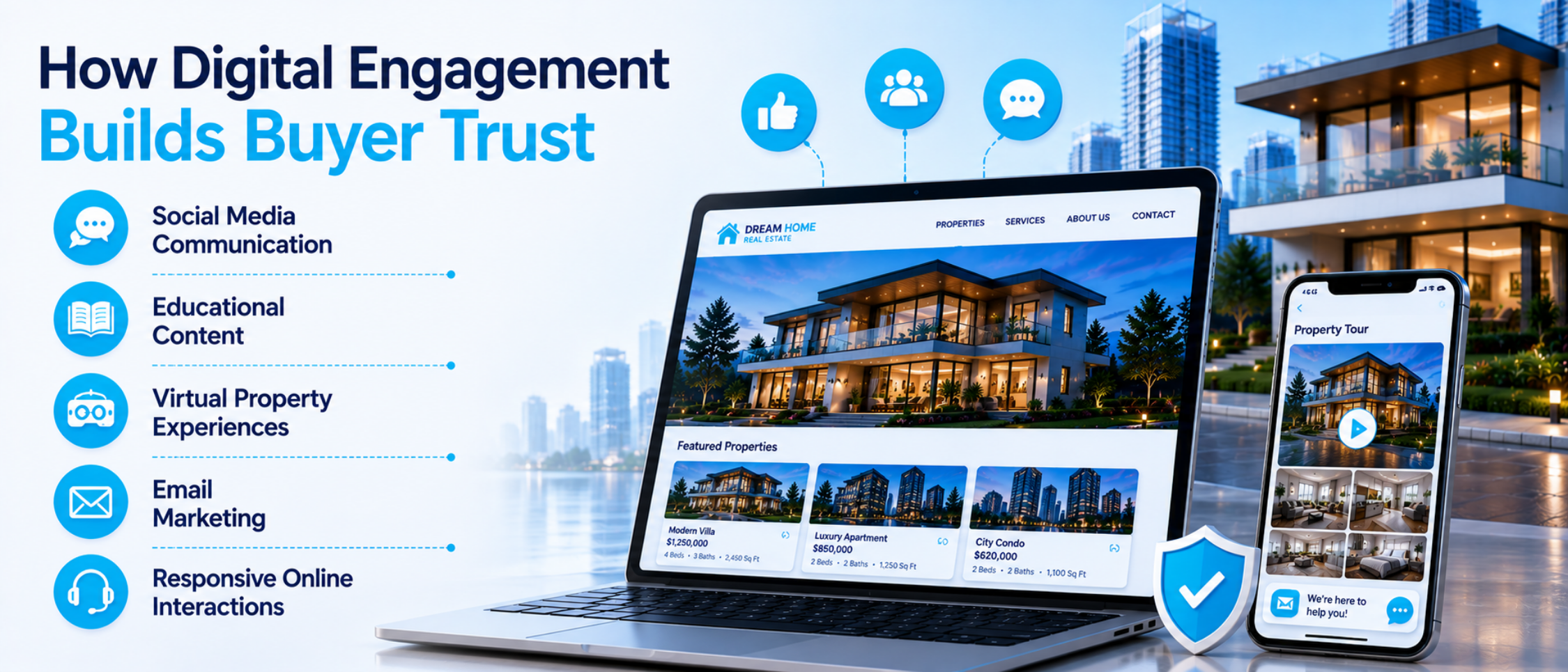
Trust plays a major role in real estate decisions. Buyers often evaluate not only properties, but also the professionalism and credibility of the business behind them.
Digital engagement helps strengthen trust through:
- Social media communication
- Educational content
- Virtual property experiences
- Email marketing
- Responsive online interactions
Consistent communication and valuable content position real estate professionals as reliable advisors rather than just sellers.
Why CRM and Automation Support Real Estate Growth
As inquiries increase, managing leads manually becomes difficult. CRM systems and automation tools help businesses organize buyer interactions and improve follow-up efficiency.
CRM-driven workflows help:
- Capture inquiries automatically
- Track buyer activity
- Improve response times
- Personalize communication
- Reduce missed opportunities
Automation also allows teams to focus more on relationship-building instead of repetitive administrative tasks.
The Future of Real Estate Strategy

Real estate marketing is becoming more data-driven, automated, and personalized. Technologies such as AI-powered recommendations, predictive analytics, and virtual property experiences are reshaping buyer engagement.
Businesses that invest early in digital strategy and automation will be better positioned for scalable growth and long-term market relevance.
How Arissa International Can Help
Arissa International helps real estate businesses build scalable digital growth systems through strategy, automation, and performance marketing.
As a HubSpot Gold Partner, we help brands improve visibility, strengthen buyer engagement, and optimize lead management through CRM implementation, digital marketing, automation workflows, and lead generation strategies.
Frequently Asked Questions (FAQs)
A real estate strategy is a structured approach used to improve visibility, attract buyers, generate leads, and support long-term business growth through marketing and customer engagement.
Digital marketing helps businesses reach buyers online, improve visibility, and generate qualified inquiries through targeted campaigns and consistent digital engagement.
CRM systems help organize leads, automate follow-ups, track buyer interactions, and improve communication efficiency, which supports better conversion rates.
An optimized real estate strategy improves visibility, buyer trust, lead quality, marketing performance, and scalability in a competitive market.
Arissa International helps real estate businesses strengthen digital growth through CRM integration, automation, lead generation, and performance-driven marketing strategies tailored for scalable growth.